
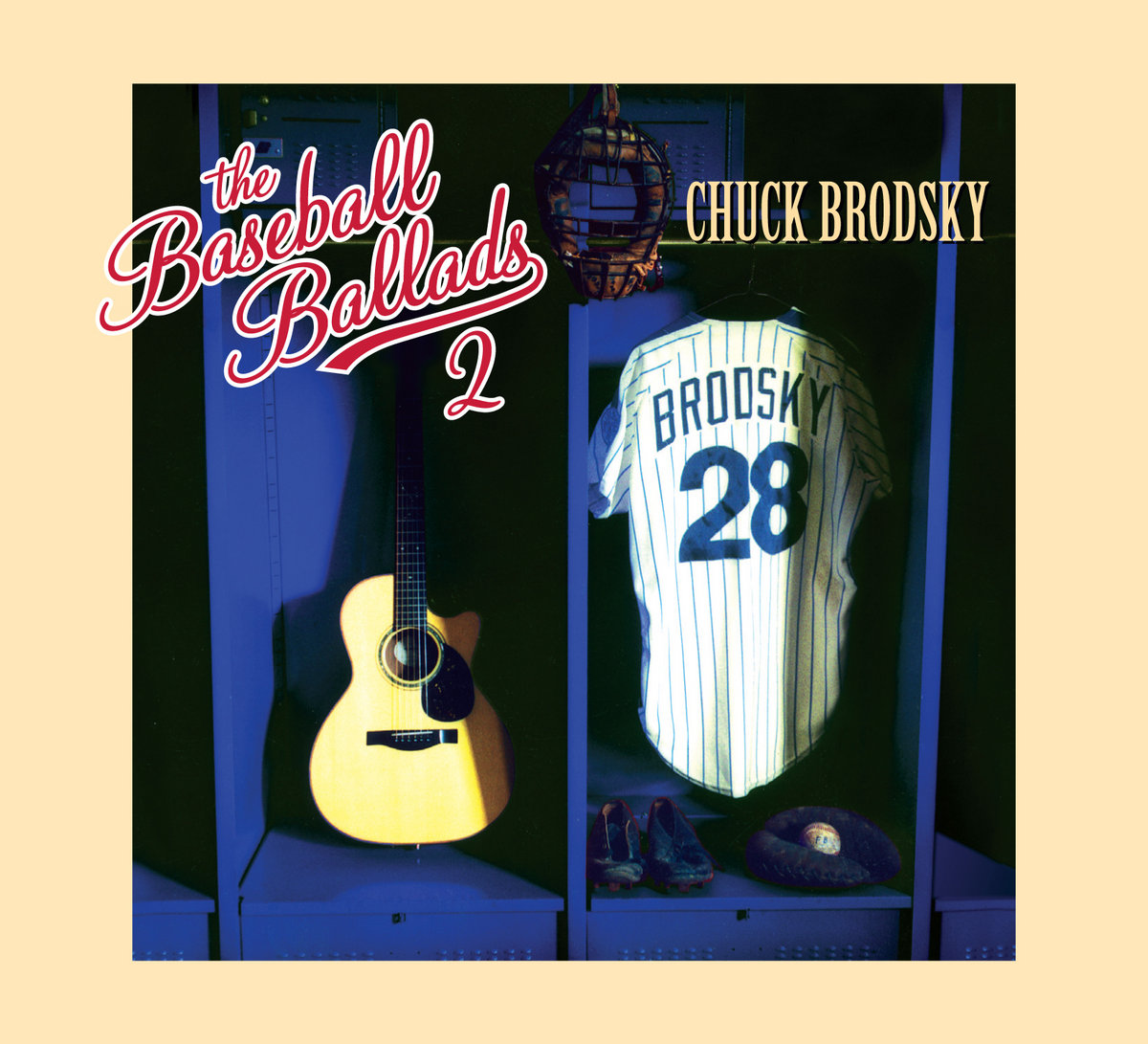
Folk and Fly Balls: Chuck Brodsky’s Songs Find a Home in Cooperstown.
Chuck Brodsky (born May 20, 1960, in Philadelphia, Pennsylvania) is an American musician and singer-songwriter known for his storytelling, humor, and sharp political commentary. Now living in Asheville, North Carolina, Brodsky has carved out a niche with songs that blend wit, heart, and history—especially through his enduring love for baseball. His work includes such fan favorites as “The Ballad of Eddie Klep”, “Moe Berg: The Song”, and “Doc Ellis’ No-No”—songs that preserve forgotten corners of America’s pastime and offer glimpses into its soul.
For Brodsky, music and storytelling run deep in the blood. He grew up in a tight-knit Jewish family in Philadelphia, where music was a part of everyday life and stories were passed around the dinner table like heirlooms. His father shared tales of growing up during the Great Depression, and his grandfather, a Ukrainian immigrant, inspired Chuck’s reverence for working-class heroes and underdogs. That family history—marked by resilience, humor, and a deep sense of justice—shaped his worldview and became the emotional foundation of his songwriting.
On his 2004 album Color Came One Day, Brodsky broadened his focus, tackling environmental issues in “Seven Miles Upwind”, lamenting the loss of regional identity in “Trees Falling”, and challenging post-9/11 government overreach in “Dangerous Times”. These songs, like much of his work, resonate with the spirit of someone raised to question authority, honor community, and speak for those without a microphone.
A well traveled and acclaimed singer-songwriter, Chuck Brodsky can easily be compared to John Prine and Steve Goodman. His witty lyrics and masterful storytelling are a perfect match for songs about America’s true pastime.
In 2025, amidst the hallowed halls of Cooperstown, a different kind of Hall of Fame induction took place — not for a player, coach, or broadcaster, but for a balladeer. Chuck Brodsky, the folk singer whose lyrics have long been laced with the scent of fresh-cut grass and the crack of the bat, was honored with the inclusion of his baseball songs in the National Baseball Hall of Fame’s sound recording library.
It was a quiet ceremony by comparison — no plaques, no speeches, no massive crowds — and yet, it carried a weight all its own. Because for those who understand baseball not just as a game but as a living story, Brodsky has been one of its most faithful historians.
His music has never been about the box scores. Instead, Chuck Brodsky sings about the people behind the stats — the trailblazers, the misfits, the legends forgotten too soon. In “The Ballad of Eddie Klepp,” he immortalizes the only white man to play in the Negro Leagues, reminding us of a story too few know. In “Letters in the Dirt,” he gives voice to Dick Allen, whose quiet dignity often went unrecognized in his time. Each song is a miniature Hall of Fame speech, written in melody instead of marble.
For decades, Brodsky’s fans have known what Cooperstown now affirms: that his songs are as essential to baseball’s soul as pine tar and scorecards. His guitar has become a glove for stories that might’ve slipped through history’s fingers.
The induction isn’t just a milestone — it’s a moment of belonging. It says that stories matter, that the poetry of baseball deserves to be preserved right alongside the stats and trophies. And it says that folk music, with all its heart and truth, still has a place in the telling of America’s oldest game.
For Chuck Brodsky, every song is a thread connecting past and present—woven with humor, humanity, and the voices of those who came before. In a world that’s often too fast to remember its roots, Chuck Brodsky has made sure baseball never forgets its heart. Now, that heart beats in Cooperstown.
Catch my interview with Chuck—pure passion, pure game! Chuck Brodsky Interview
A few words from letters in the dirt;
Going back to old Connie Mack Stadium
You teaching me the rules of the game
We root-root-rooted for the home team
Those other people should’ve been ashamed